


Table of Contents
- Key Differences Between a Gynaecology Clinic and Hospital
- Waiting Times: Clinic vs Hospital
- Private Gynaecologist Esher Cost and Financial Considerations
- Gynaecology Referral Process in the UK
- Benefits of Private Women’s Health Clinics
- When to Choose a Hospital for Gynaecological Care
- Choosing the Right Option for Your Needs
- Frequently Asked Questions
Last Updated: October 15, 2026
Key Differences Between a Gynaecology Clinic and Hospital
When you’re dealing with gynaecological concerns, whether heavy periods, pelvic pain, or hormonal imbalances, the choice between a private gynaecology clinic and a hospital can feel overwhelming. The core distinction is straightforward: a gynaecology clinic vs hospital in Esher each serves different needs at different stages of care. Understanding what each offers helps you make the decision that actually fits your situation.
Setting and Environment
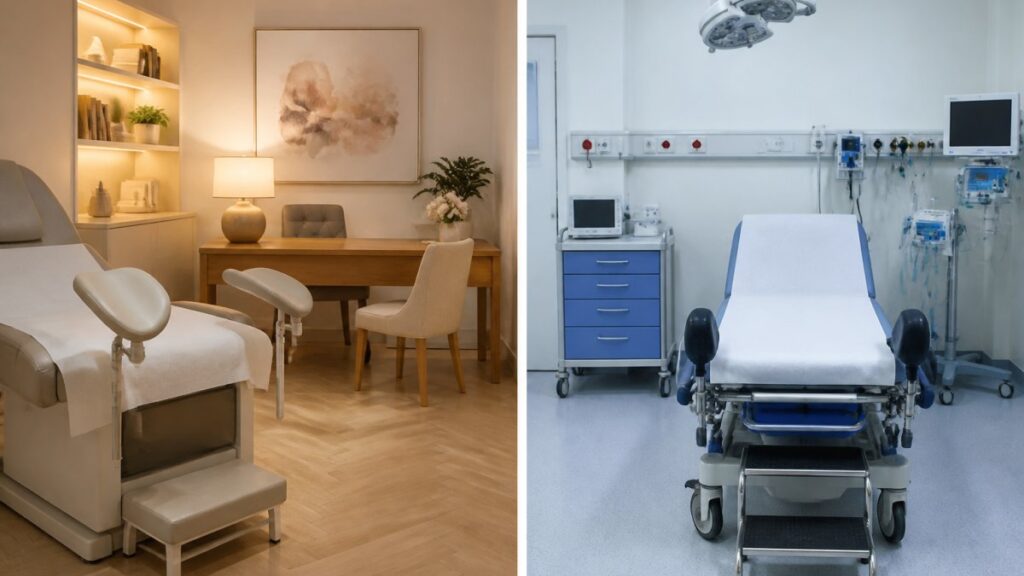
A private gynaecology clinic operates as a focused, specialist environment. You’re typically seen in a dedicated women’s health practice where the entire team specialises in reproductive and gynaecological issues. The atmosphere is designed around patient comfort and staff trained specifically in women’s health concerns.
A hospital gynaecology department, by contrast, is part of a larger acute care facility. You’ll navigate general hospital infrastructure alongside emergency departments, maternity wards, and other specialties. The environment serves a broader patient population across multiple medical disciplines.
Scope of Services
Private clinics like Liberty Health Clinics Ltd focus on targeted gynaecological care. They handle consultations, diagnostics, minor procedures (such as Mirena coil fittings), and management of conditions like endometriosis, fibroids, and adenomyosis. They excel at investigating and treating non-emergency gynaecological problems with continuity of care from the same clinician.
Hospitals provide comprehensive gynaecological services alongside emergency capacity. They manage complex surgical cases, high-risk pregnancies, and acute complications. If your condition requires inpatient surgery or intensive monitoring, hospital facilities are equipped for that level of intervention.
Waiting Times: Clinic vs Hospital
The waiting time difference is often the most immediate practical consideration when comparing a gynaecology clinic vs hospital in Esher. NHS hospital referrals typically involve longer waits, often several months for routine gynaecological appointments, depending on local demand. Emergency cases are prioritised, but standard consultations sit in a queue.
Private clinics generally offer faster access. Many can schedule appointments within days or weeks rather than months.
The trade-off is cost. NHS care through your GP referral is free at the point of use. Private clinic appointments require payment, though this varies by provider and the complexity of your case.
Private Gynaecologist Esher Cost and Financial Considerations
The cost of private gynaecology care depends on several factors: the type of consultation, whether diagnostic tests are needed, and any procedures. Diagnostic imaging, blood work, and specialist procedures add to the total cost.
For a private gynaecologist Esher cost, you’ll want to ask about:
- Initial consultation fees
- Follow-up appointment pricing
- Whether imaging or testing is included or billed separately
- Payment plans or package options
- Whether your private health insurance covers any portion
Others prefer the NHS route despite longer waits because there’s no financial barrier to access.
Liberty Health Clinics Ltd offers specialist women’s health care tailored to your specific needs. For current pricing, visit their website or contact them directly for a consultation quote.
Gynaecology Referral Process in the UK
Understanding how to access each option clarifies your path forward.
NHS Referral Pathway
To access NHS gynaecology care, you start with your GP. Describe your symptoms and concerns, heavy bleeding, pelvic pain, hormonal issues, fertility concerns, and your GP determines whether a hospital gynaecology referral is appropriate. They submit a referral to your local NHS trust’s gynaecology department.
You’ll then be added to the waiting list. Routine referrals are typically seen within 18 weeks under NHS targets, though actual waits vary by region and current demand (Referral to treatment consultant-led waiting times: rules suite (October 2022)). Urgent referrals (suspected cancer, severe bleeding) are prioritised.
Once seen at the hospital clinic, you may receive a diagnosis, be offered treatment, or be referred onward for imaging or specialist procedures. Follow-up appointments are scheduled as needed.
Private Clinic Access
For private care, you don’t need a GP referral. You can contact a private gynaecology clinic directly and book a consultation. Many clinics offer online booking or phone consultation options to get you started quickly.
Some women use a hybrid approach: they see their GP first to rule out urgent issues, then book a private consultation for more detailed investigation and ongoing management. This combines NHS safety-netting with private convenience. This strategic layering of care often leads patients to consider whether integrated wellness models might offer a more cohesive path to long-term health than relying on separate specialists.
Benefits of Private Women’s Health Clinics
A private women’s health clinic offers several advantages that matter when you’re managing chronic gynaecological conditions or seeking preventative care.

Continuity of care is the biggest advantage. You see the same clinician across multiple visits, so they understand your history, your concerns, and your response to treatments. This consistency leads to better-informed decisions and faster problem-solving.
Time and attention matter more in a private setting. Appointments are longer, questions are answered thoroughly, and you’re not rushed through a busy NHS clinic schedule.
Specialist focus means the entire team knows women’s health inside out. They’re not splitting their attention across multiple departments. They’ve seen many cases like yours and can offer evidence-based options.
Faster diagnostics reduce the frustration of waiting months between appointments and tests. If you need imaging, blood work, or specialist procedures, private clinics often arrange these within days rather than weeks.
Holistic approach to perimenopause and menopause symptoms. Liberty Health Clinics Ltd takes time to explore how symptoms affect your life, sleep, mood, relationships, work, and tailor treatment accordingly rather than offering a one-size-fits-all approach.
When to Choose a Hospital for Gynaecological Care
Hospitals remain the right choice in specific situations.
If you need complex surgery, hysterectomy, myomectomy for large fibroids, or extensive endometriosis excision, hospital theatres have the infrastructure, backup support, and aftercare facilities. Private clinics may offer minor procedures, but major surgery typically requires hospital capacity.
Acute complications demand hospital access. Severe bleeding that won’t stop, suspected ovarian torsion, or other emergencies require immediate hospital assessment and intervention.
High-risk pregnancies, fertility treatment complications, or miscarriage management often happen in hospital settings where intensive monitoring is available.
If your condition is rare or complex and requires input from multiple specialists, gynaecology, oncology, gastroenterology, hospitals have those teams in-house for coordinated care.
And if cost is the barrier, NHS hospital care is free. You don’t pay at the appointment, and there’s no financial risk if investigations or treatment plans change.
Choosing the Right Option for Your Needs
The decision hinges on your specific situation and priorities.
Choose a private gynaecology clinic if:
- You’ve been waiting months for NHS care and need answers now
- You have a specific condition like endometriosis or fibroids requiring ongoing specialist management
- You value continuity with the same clinician
- You want more time in appointments and thorough investigation
- You’re managing perimenopause or menopause symptoms and want personalised support
Choose an NHS hospital referral if:
- You need emergency or acute care
- Your condition requires complex surgery or multidisciplinary input
- Cost is a significant factor
- Your GP has identified a safety concern requiring hospital assessment
- You prefer the NHS pathway and can manage the wait
Many women use both. They might start with NHS referral to establish a diagnosis, then move to private care for ongoing management of a chronic condition. This hybrid approach combines NHS safety-netting with private convenience and expertise.
For women in Esher seeking specialist women’s health care, Liberty Health Clinics Ltd provides expert clinicians experienced in perimenopause, menopause, Mirena coil fittings, and gynaecological conditions including heavy bleeding and pelvic pain. Their approach focuses on continuity of care and time for thorough investigation, the hallmarks of effective private practice.
The frustration of being dismissed by your GP or waiting months for hospital appointments is real. You deserve care that takes your symptoms seriously and investigates them properly. Whether you choose private clinic care or NHS hospital referral depends on your timeline, your condition’s complexity, and your priorities. The key is choosing an option where you feel heard and supported through the process. Liberty Health Clinics Ltd offers specialist attention for women managing gynaecological concerns in Esher. Get in touch to discuss how their team can help you move forward with confidence.
Frequently Asked Questions
What is the difference between a private gynaecology clinic and an NHS hospital?
Private gynaecology clinics typically focus on specialist women’s health care in an outpatient setting, offering appointments with shorter waiting times and often more personalised attention. NHS hospitals provide comprehensive gynaecological services, including emergency care and complex surgical procedures, but appointments are scheduled based on clinical priority and can involve longer waits. Both are regulated, though private clinics are inspected by the CQC, and both employ qualified specialists.
Do I need a GP referral to visit a private gynaecology clinic?
No, you do not need a GP referral for a private gynaecology clinic. You can contact a private clinic directly to book an appointment. However, if you have NHS records or recent test results from your GP, bringing these to your first appointment can be helpful. Some women choose to inform their GP of their private care so records remain coordinated.
How quickly can I be seen at a private clinic compared to a hospital?
Private clinics typically offer appointments with shorter waiting times, depending on clinician availability. NHS hospital appointments often involve longer waits, particularly for non-urgent conditions, sometimes several months depending on local demand and your clinical priority. The exact timeline depends on your condition and the specific clinic or hospital, so it’s worth contacting them directly for current waiting times.
What conditions can private women’s health clinics treat?
Private women’s health clinics treat a wide range of gynaecological conditions, including heavy bleeding, pelvic pain, endometriosis, fibroids, adenomyosis, hormonal imbalances, severe PMS, and menopause or perimenopause symptoms. Many also offer fertility assessments, preconception care, and Mirena coil fitting. However, complex surgical cases or emergency situations may still require hospital care.